
I./ Complete the sentences about famous Japanese people. Use was and were.
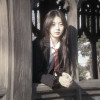
1. Ichiyo Higuchi ……… a Japanese writer.
2. She …….. born in 1872.
3. Murasaki Shikibu ……… a Japanese poet.
4. She …….. born in 973.
5. Takahashi Korekiyo and Hirobumi ………. Prime Ministers.
6. Their faces ………….. on Japanese money.
II./ Choose the best option.
1. Where was/ were you yesterday?
2. Was/Were you born in 1977?
3. Yesterday was/were Monday.
4. I was/were in Moscow last summer.
5. Was/Were Anna and Liz at work yesterday?
6. They wasn’t /weren’t explorers.
7. What was/were they famous for?
III./ Write the past simple form of the verbs.
Have
Phone
Work
Study
Come
Leave
Make
Learn
discover
play
IV./ Complete the text with the simple past form of these verbs: live; visit; die; go; be( x3); meet; become; travel.
Sir Francis Drake (1)……… born in about 1540. There (2)………… 12 children in the family. They (3)…………. In England. At the age of 12, Francis Drake (4)………. A sailor and (5)……….. abroad.
As an explorer, Drake (6)………… Cape Horn, Madago, Cape Blanko, and many other places. He (7)…………. his wife, Mary Newman, in 1569. Sir Francis Drake (8)………….. the first Englishman who (9)………… round the world. He (10)………… in 1596.
V./ Choose the correct option.
1. In/ On his mid-twenties, he became a photographer.
2. I visited Mexico in/ on 1930.
3. The head of the Emperor was in/ on the money.
4. My birthday is in/ on the 14th of May.
5. In/ On the thirteen century, he travelled to China.
6. Nicola was born in/ on Italy.
VII./ Choose the correct alternative.
1. It was very tired/ tiring film. It lasted for 3 hours.
2. Jerry is interested/ interesting in ancient coins.
3. He left the cinema because the film was bored/ boring.
4. He was so excited/ exciting to know he passed the test.
5. I was bored/ boring with watching TV.
6. She was very tired/ tiring after a long day at work.
7. The book was so interested/ interesting that he read it all night.
8. Our holiday in Mexico was very excited/ exciting.
VIII./ Reorder the letters in brackets to complete the sentences.
1. The Queen’s face was on the Canadian twenty-dollar…………….( tone).
2. Jack found an old silver………….. (noci).
3. I keep all my money in the …………….( kanb).
4. When I travelled to the USA, I ……………pounds to dollars( caghen).
5. In this shop you can only pay by ………….( sach).
6. You can pay with a …………….( retcid darc).
IX./ Complete the parts of the conversation with the words from the box. Then order them (1-5).
certainly much us welcome charity
a. Yes, …………………….. . Here you are
b. Thanks very……………….. .
c. Could you give …………………. something?
d. You’re …………………. .
e. Hi! I’m collecting for a …………………… .
1 2 3 4 5
X./ Complete the expressions with the words from the box.
forward regards yours next soon
1. See you…………….!
2. See you again………………….. year.
3. Best…………………. .
4. I look …………….. to hearing from you.
5. …………….. sincerely.