
Bạn hỏi - Chuyên gia trả lời
Bạn cần hỏi gì?
Ask and answer. (Hỏi và trả lời.)
Listen and cross out the sentence that doesn't follow the note in "a." (Nghe và gạch bỏ câu không theo ghi chú phần a.)
Read the sentences with the correct sound changes to a partner. (Đọc câu đúng với sự thay đổi phát âm cùng bạn.)
Listen. Notice the sound changes of the underlined words. (Nghe. Chú ý sự thay đổi âm thanh của những từ được gạch chân.)
"... and ..." often sounds like /n/. ("... and ..." thường được phát âm giống /n/.)
In pairs: Make sentences about different types of transportation. Use the prompts. (Theo cặp: Viết câu về các loại phương tiện khác nhau sử dụng gợi ý.)
5. Coal power plants are popular … cheap … they cause pollution.
4. Solar panels save money … they are clean.
3. Microwave ovens are cheap … they use less electricity than electric ovens.
Fill in the blanks using “and” or “, but”. (Điền vào chỗ trống sử dụng “and hoặc “, but”.)
1. Electric cars are clean , but they are expensive to buy.
2. Nuclear power can sometimes be dangerous … it's cheap to run.
6. Microwave ovens/ convenient/ save money
4. Natural gas/ cheap/ non-renewable
3. Wind power/ clean/ renewable/n oisy
2. Hydropower/ clean/ cheap
Write sentences using the prompts. (Viết lại câu sử dụng gợi ý.)
1. Coal/ cheap/ easy/ use
Listen and repeat. (Nghe và lặp lại.)
4. What is a disadvantage of solar power?
3. What are two advantages of wind power plants ?
2. Why is natural gas better than coal?
Now, read and answer the questions. (Bây giờ, đọc và trả lời câu hỏi.)
1. Why does the article say coal plants are common?
Read the text and underline the correct title. (Đọc văn bản và gạch chân tiêu đề đúng.)
In pairs: Which of the energy sources is the best choice for the future of your country? (Theo cặp: Nguồn năng lượng nào là lựa chọn tốt nhất đối với đất nước bạn trong tương lai?)
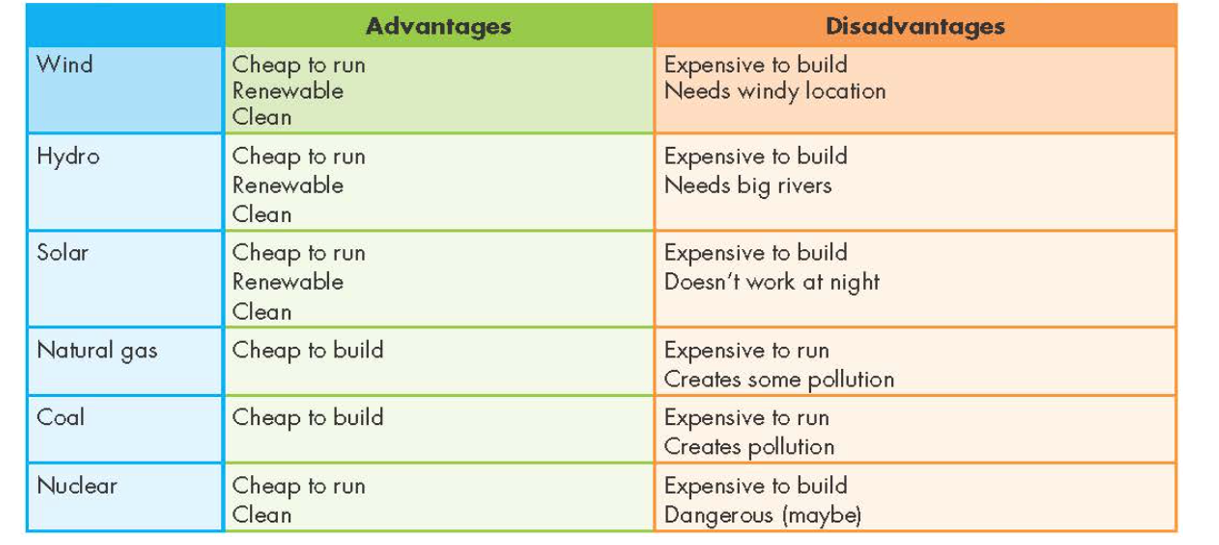
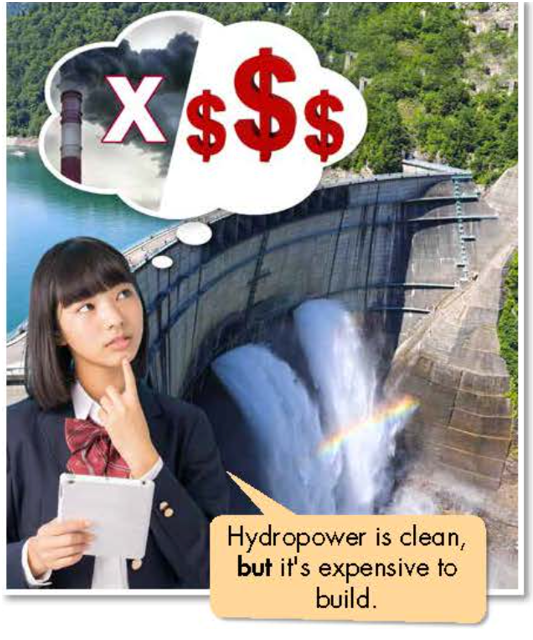
In pairs: Discuss which energies you think are clean to run or cause pollution. (Theo cặp: Thảo luận về năng lượng nào bạn nghĩ là sạch để tiến hành hoặc gây ô nhiễm.)
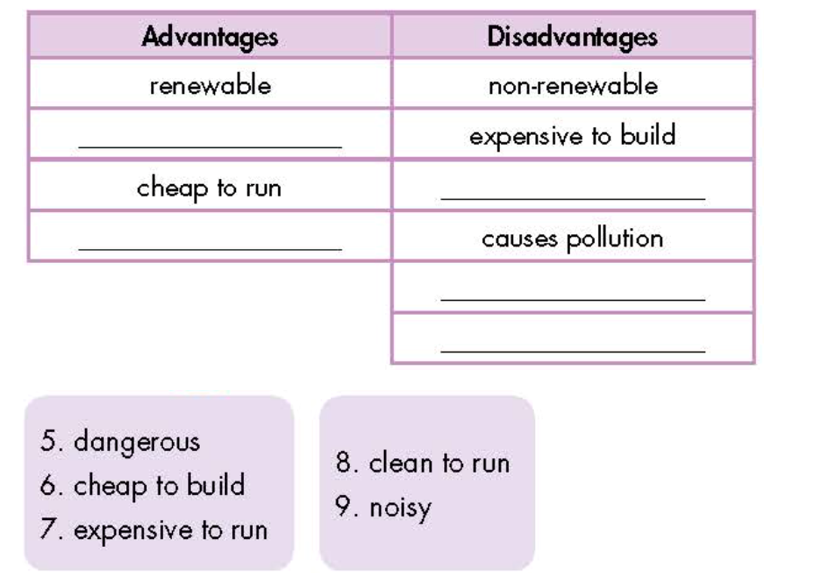
Add each word/phrase (5–9) to the correct column. Listen and repeat. (Thêm từng từ /cụm từ (5–9) vào đúng cột. Nghe và lặp lại.)
Match the words with the pictures. (Nối từ với bức tranh tương ứng.)
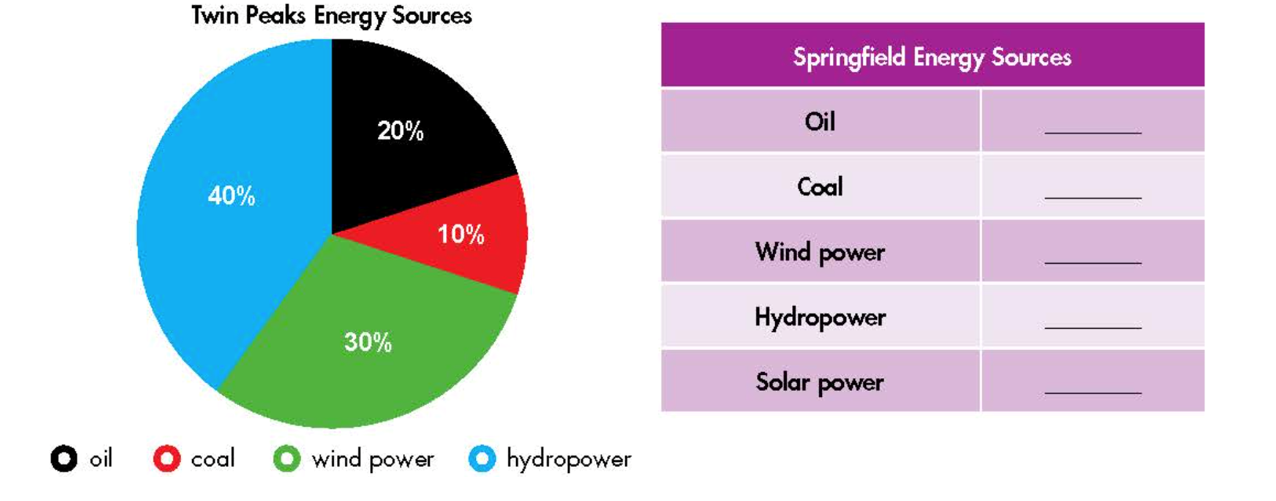
Compare the energy sources for Twin Peaks and Springfield. Which city uses more renewable energy? (So sánh nguồn năng lượng giữa Twin Peaks và Springfield. Thành phố nào sử dụng nhiều năng lượng tái tạo hơn?)
You're an energy expert interested in how two different cities use different kinds of energy. In pairs: Student B, it p.123 File 11. Student A, ask about Springfield and complete the table. Swap roles. Answer questions about Twin Peaks. (Bạn là một chuyên gia quan tâm về việc hai thành phố khác nhau sử dụng những loại năng lượng khác nhau như thế nào. Theo cặp: Học sinh B, file 11 trang 123. Học sinh A, hỏi về Springfield và hoàn thành bảng. Hoán đổi vai trò. Trả lời câu hỏi về Twin Peaks.)
Ask and answer. Then, compare energy sources in Bigton and Greenville. Swap roles and repeat. (Hỏi và trả lời. Sau đó, so sánh các nguồn năng lượng ở Bigton và Greenville. Đổi vai và lặp lại.)
Listen and cross out the word that doesn't follow the note in "a." (Nghe và loại bỏ từ không tuân theo ghi chú phần a.)
Read the words with the correct stress to a partner. (Đọc từ với trọng âm đúng cùng với bạn.)
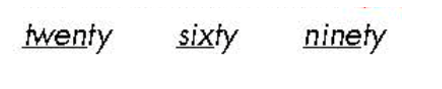
Listen to the words and focus on the underlined letters. (Nghe các từ và chú ý chữ cái được gạch chân.)
Stress the first syllable for numbers which are multiples of ten. (Nhấn mạnh âm tiết đầu tiên cho các số tròn chục.)
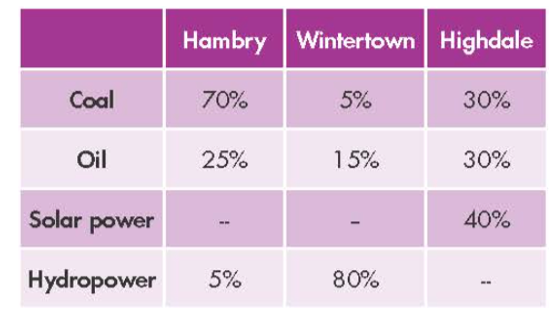
In pairs: Compare more information from the table. Use the prompts. (Theo cặp: So sánh thông tin từ bảng và sử dụng gợi ý.)
Look at the table and write the sentences. (Nhìn bảng và viết câu.)
4. in/ use/ Springfield/ electricity/ in/ Twin Peaks./ People/ than/ people/ more
3. than/ gets/ Springfield/ from/ energy/ 40%/ less/ Twin Peaks./ solar/ power
2. natural/ Highdale/ burn/ gas/ Does/ than/ Wintertown?/ more